Preserved in Peat: The Bog Poems and Heaney's Archaeology of the Human Condition
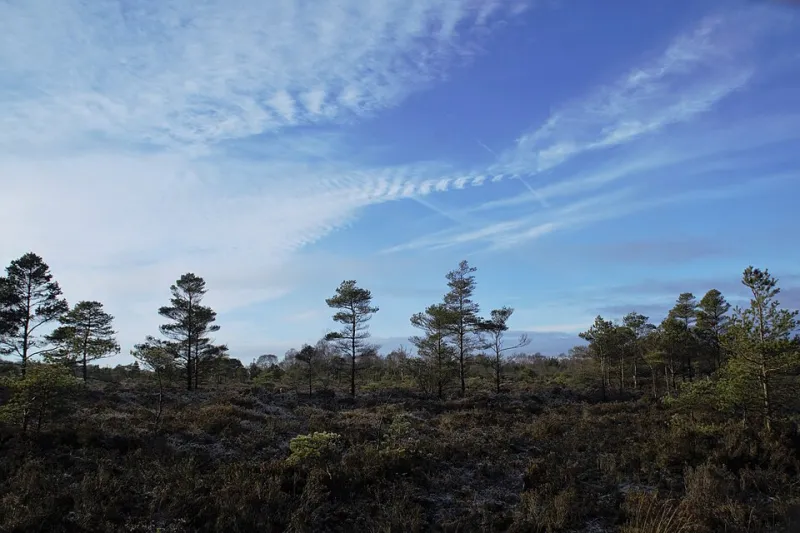
Photo: Limnoporus, CC BY-SA 4.0, via Wikimedia Commons
There is something deeply fitting about the fact that Seamus Heaney first encountered the bog bodies of northern Europe not in a field or a museum, but in a book. P.V. Glob's The Bog People, published in English translation in 1969, presented its readers with photographs of human remains that had lain submerged in Danish and Irish peatlands for two millennia, their features preserved with an uncanny, almost accusatory clarity. For many readers, the images were simply remarkable. For Heaney, they were a catalyst — the beginning of one of the most sustained and searching engagements with history, violence, and landscape in modern British and Irish poetry.
The bog poems that followed over the next decade would come to define a significant portion of his reputation. They would also generate considerable critical debate, raising questions about the relationship between aesthetic beauty and political atrocity that remain unresolved and, perhaps, deliberately so.
What the Peat Preserves
The scientific phenomenon at the heart of Heaney's poetic project is worth pausing over. Peatlands, with their particular combination of acidity, low oxygen levels, and cold temperatures, create conditions that inhibit the biological processes of decomposition. Bodies deposited in bogs — whether through ritual sacrifice, execution, or accident — can emerge centuries or millennia later with their skin, hair, and internal organs substantially intact. Glob's research focused primarily on Iron Age individuals from Scandinavia and northern Germany, but the phenomenon was equally present in Ireland, where Heaney himself had grown up in close proximity to the boglands of County Derry.
For Heaney, the bog was never merely geological. In his critical prose collection Preoccupations (1980), he described the Irish bogland as a kind of memory-bank, a landscape that stored rather than erased, that held within its dark layers the accumulated residue of centuries of human presence. The discovery of preserved bodies within that landscape was therefore not simply archaeological but almost metaphysical — evidence that the past could be physically retrieved, that the dead were not beyond reach.
The Tollund Man: A Poem of Pilgrimage
Heaney's first major engagement with the bog body material came in 'The Tollund Man', published in Wintering Out (1972). The poem is structured as a kind of vow — the speaker announces his intention to travel to Aarhus in Denmark to see the preserved head of the Tollund Man, who was hanged approximately two thousand years before Heaney encountered his image in Glob's photographs.
What makes the poem remarkable is the audacity of its central move: Heaney connects the ancient Danish sacrifice directly to the sectarian killings of contemporary Northern Ireland. The "four young brothers" killed on a Tyrone road are invoked in the same breath as the ritual victim of the Iron Age, their deaths gathered into a single, terrible continuum. The bog becomes a symbol not only of preservation but of repetition — the landscape in which violence deposits itself and, in doing so, reveals the persistence of human cruelty across time.
The poem resists easy consolation. Its closing lines — "I will feel lost, / Unhappy and at home" — encapsulate a characteristic Heaney ambivalence: the recognition that belonging to a place means belonging also to its histories of suffering.
The Grauballe Man: Aesthetics and Accountability
If 'The Tollund Man' is a poem of pilgrimage and political analogy, 'The Grauballe Man', from North (1975), represents a more formally ambitious and philosophically complex engagement with the same material. The poem opens with a series of extended similes that transform the bog body's physical features into natural phenomena — his spine a "dark elderberry", his instep "a swan's foot", his hurdled knees "a forceps baby's". The effect is extraordinarily beautiful, and that beauty is precisely the poem's subject.
Heaney is acutely aware of the ethical difficulty of aestheticising a murdered human being. The poem's penultimate stanza confronts this tension directly, weighing the body "between beauty and atrocity" — a formulation that has generated substantial critical commentary. The American critic Ciaran Carson famously challenged Heaney on this point, arguing that the aestheticisation of sectarian violence in North risked rendering it palatably distant. Heaney engaged with such criticisms seriously, and the tension they identified enriches rather than diminishes the poems themselves.
For British readers encountering these works in the context of the Troubles, the discomfort was productive. The bog poems refused the comfort of historical distance; they insisted that the violence of the Iron Age and the violence of the late twentieth century occupied the same moral and imaginative space.
Punishment and the Limits of Witness
'Punishment', perhaps the most controversial of the bog poems, takes as its subject a young woman whose preserved body suggested she had been executed for adultery. Heaney imagines her, identifies with her, and then — in a move that shocked many readers — confesses that he would have stood silent while she was punished, as he stood silent during the tarring and feathering of women in Northern Ireland accused of associating with British soldiers.
The poem is an act of self-indictment as much as elegy. Its power lies in the refusal to separate the poet from the community whose violence he observes. This is not the stance of the detached, enlightened observer; it is the confession of complicity that attends membership of any embattled community.
In British and Irish secondary school classrooms, 'Punishment' has long been one of the most taught of Heaney's poems, not least because it raises questions that extend far beyond its immediate context — questions about moral courage, collective responsibility, and the silences that societies maintain around their own cruelties.
The Poet as Archaeologist
The metaphor of Heaney as a poet-archaeologist is one that he himself encouraged, describing the act of writing as analogous to digging — an image he introduced in the very first poem of his very first collection, 'Digging', where the pen becomes a spade. The bog poems extend this metaphor into the political and historical realm. If the poet digs into language to retrieve buried meanings, he also digs into the landscape to retrieve buried lives.
What distinguishes Heaney's archaeological imagination from mere antiquarianism is his insistence on the present tense of the past. The bog bodies are not historical curiosities; they are witnesses. Their preservation is not comfort but demand — a demand that the living account for the world they have inherited and the violence they have tolerated.
An Enduring Resonance
Decades after their initial publication, the bog poems continue to speak with urgency to readers in Britain and Ireland. In an era increasingly attentive to questions of historical memory, cultural identity, and the moral weight of landscape, Heaney's peatland meditations feel not dated but prescient. The bog, in his hands, becomes a figure for all the ways in which the past refuses to remain buried — and for the poet's particular responsibility to listen when it speaks.