A Poet in Every Pocket: The Case for Putting Seamus Heaney on the Currency
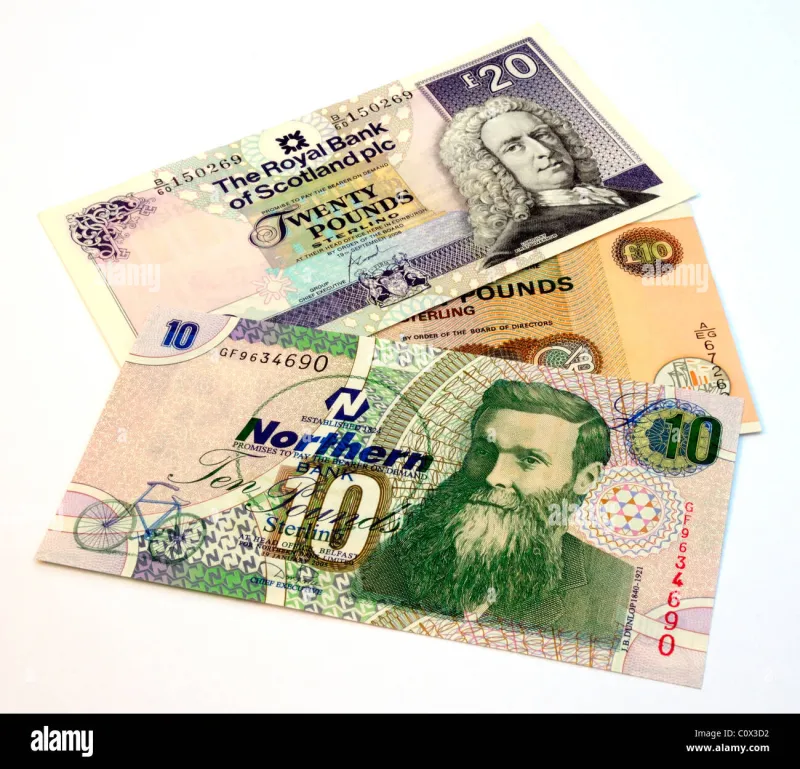
Photo: Irish and British banknotes close up currency macro photography, via c8.alamy.com
Nations tell on themselves by whom they print. A banknote is a small, daily plebiscite: a face chosen, a life endorsed, a set of values slipped discreetly into every till and trouser pocket. So when campaigns arise — as they periodically do — to place Seamus Heaney on a banknote, whether Irish or British, the question is not merely whether the poet deserves the honour. It is what the honour would say about us.
The Precedent and the Problem
The Republic of Ireland has long been generous in this respect. Its notes once carried the faces of Joyce, Yeats and, briefly in commemorative form, lesser-known figures of the literary canon. Britain, by contrast, has been more sparing with its poets: Shakespeare appears on notes issued by some banks, and the Royal Mint has struck coins honouring writers, but no British banknote currently bears a poet's face. The £5 note carries Churchill; the £10, Austen. Poetry, as a category of national esteem, sits awkwardly between them.
Heaney complicates the picture in a productive way. He was an Irish citizen who lived for decades in Dublin, yet his readership, his honours and, latterly, his archive are thoroughly entwined with Britain. He taught at Oxford and Harvard, held the Professor of Poetry chair, won the Nobel Prize in 1995, and is read by every GCSE candidate in the land. He is, arguably, the last poet whom both jurisdictions can claim without argument.
What the Objections Reveal
The case against is familiar. Currency, some argue, should be reserved for constitutional figures — monarchs, statesmen, the safely institutional. Others object that any artist placed on a note becomes an instrument of official culture, their complexity sanded down to a portrait and a pithy quotation.
Both objections deserve a hearing. Yet both rest on a conservative view of what money is for. Banknotes are already saturated with meaning; the choice is never between meaning and neutrality but between competing versions of the nation. A note bearing Heaney would simply make visible a fact that two decades of syllabuses, prizes and memorial lectures have already established: that the poetic tradition of these islands is shared, contested and richer for it.
There is a further, subtler objection — that Heaney himself would have resisted the canonisation. He was wary of being conscripted as a national emblem, of the 'symbolic' role that burdens public poets. But resistance to easy symbolism is precisely what his work teaches. A note is not a monument; it circulates, it is spent, it passes between strangers. Heaney's verse, too, was built for circulation — plain-spoken, generous, addressed to whoever happened to be listening.
The Unifying Argument
What tips the argument is Heaney's peculiar double citizenship of the imagination. He wrote of the Ulster farm and the Dublin study, of classical Greece and the Irish bog, of Britain's language and Ireland's grievance. His famous line from 'The Republic of Conscience' — that one belongs 'to a nation that treats its writers as it treats its spies' — cuts both ways, refusing the comforts of any flag.
To place such a figure on currency — either currency — would be an act of confidence. On an Irish note, it would acknowledge the poet's rootedness in Derry and Mossbawn. On a British note, it would concede, gracefully and publicly, that the literary inheritance of these islands does not stop at the Irish Sea. On both, it would put into millions of hands a daily reminder that language, carefully tended, is a common good.
A Modest Proposal
The practical route exists. The Central Bank of Ireland periodically refreshes its commemorative issues; the Bank of England consults the public on note subjects, weighing cultural contribution alongside historical standing. A petition, a parliamentary question, a well-timed anniversary — the machinery of recognition is neither obscure nor untested. The 2018 centenary of his birth passed with lectures and exhibitions; the next occasion for national self-regard should not pass without the question being asked in earnest.
Nations get the faces they ask for. Heaney asked for very little — a hearing, a fair wind, an honest word. Putting him in every pocket would be a small repayment of a large debt, and a quiet statement that poetry still counts, in every sense of the word.