Across the Irish Sea: How Heaney's Poetic Language Reshaped British Verse
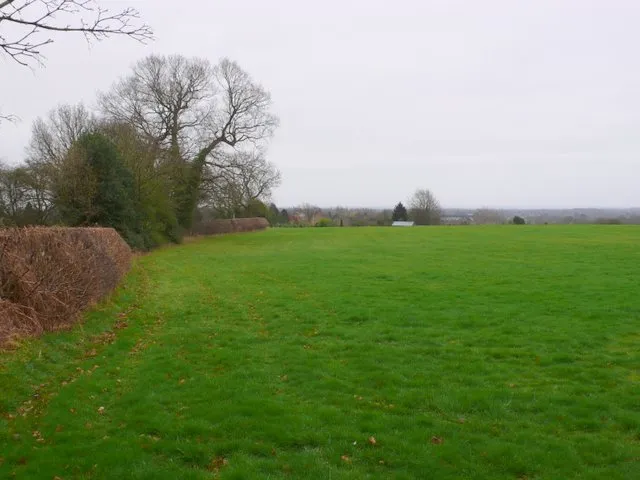
Photo: Nigel Mykura , CC BY-SA 2.0, via Wikimedia Commons
When Seamus Heaney received the Nobel Prize for Literature in 1995, the Swedish Academy described his work as possessing 'lyrical beauty and ethical depth.' What the citation did not — perhaps could not — fully articulate was the extent to which that beauty had already become part of the shared atmosphere that British poets breathed. Heaney did not merely write great poems. He altered the conditions under which great poems could be written.
To understand his influence on contemporary British poetry, one must resist the temptation to think in terms of imitation. Poets do not, as a rule, set out to copy their predecessors. Rather, they absorb modes of attention, rhythmic instincts, and thematic permissions. Heaney's work, from the dense ruralism of Death of a Naturalist (1966) through to the elegiac late collections, offered a model of what poetry could hold: the local and the mythic, the sensory and the intellectual, the personal grief and the communal wound. That model proved extraordinarily generative.
The Texture of the Physical World
One of Heaney's most lasting contributions to British poetic practice is his insistence on the moral seriousness of physical description. In poems such as 'Digging' and 'Blackberry-Picking,' the act of close observation is never merely descriptive; it is epistemological. To name a thing precisely is to claim a relationship with it, and that relationship carries obligation.
Gillian Clarke, the Welsh poet and former National Poet of Wales, has spoken openly about the permission Heaney's work granted her to write from a position rooted in landscape and agricultural labour without apology. Her poem 'Neighbours,' written in the wake of the Chernobyl disaster, shares with Heaney's bog poems a conviction that the non-human world is not backdrop but protagonist. The contaminated rain that falls on Welsh lambs in Clarke's poem carries the same kind of historical and ethical freight that peat carries in Heaney's verse. Both poets understand that the ground beneath our feet is never neutral.
Simon Armitage, who served as Poet Laureate from 2019, has acknowledged Heaney as a formative presence, and the influence is audible in Armitage's commitment to vernacular precision. Where Heaney reaches into the Anglo-Saxon word-hoard to thicken his language — a technique most visible in his translation of Beowulf but present throughout his original work — Armitage draws on Northern English dialect with comparable deliberateness. Both poets understand that choosing a word is choosing a history, a community, a set of allegiances.
Rhythm as Argument
Perhaps the subtlest and most consequential of Heaney's legacies is rhythmic. His verse is built on a tension between the pull of traditional metre and the counter-pressure of spoken speech. He rarely writes in strict iambic pentameter, yet his lines are never without pulse. The result is a prosody that feels simultaneously inevitable and improvised — as though the poem arrived at its form through the pressure of genuine feeling rather than formal prescription.
This approach has been widely absorbed by poets who came of age reading Heaney in school and university during the 1980s and 1990s. Poets such as Daljit Nagra and Patience Agbabi, though working with very different cultural materials, share Heaney's understanding that rhythm is not decoration but argument. Nagra's use of Punjabi-inflected English in poems that address immigrant experience deploys a kind of rhythmic code-switching that has conceptual antecedents in Heaney's negotiation between Irish speech patterns and English literary tradition.
Thematic Permissions: Grief, Memory, and the Ordinary
Beyond technique, Heaney offered British poetry a set of thematic permissions that have proven remarkably durable. He demonstrated that grief for a specific, named individual — a father, a brother, a neighbour — could carry universal weight without being inflated into false grandeur. His sequence 'Clearances,' written in memory of his mother, remains one of the most formally controlled and emotionally devastating elegies in the English language. Its influence on contemporary elegy is substantial.
Poets such as Don Paterson and Alice Oswald, though stylistically distinct from one another and from Heaney, have both spoken of his work as exemplary in its refusal to sentimentalise. Oswald's Memorial, her excavation of the Iliad, shares with Heaney's elegiac practice a conviction that the dead deserve precision rather than consolation. The names matter. The particular details matter.
A Living Inheritance
It would be reductive to suggest that Heaney's influence is simply a matter of younger poets writing poems that resemble his. The inheritance is more diffuse and more interesting than that. What Heaney transmitted to British poetry was a set of convictions: that the local is never merely parochial; that physical labour and intellectual labour are not opposed; that a poem can be simultaneously accessible and inexhaustible.
Those convictions now circulate through British poetry with sufficient breadth that many poets absorbing them may be unaware of their specific origin. That is, perhaps, the surest measure of a truly transformative influence. Heaney's voice has not faded across the Irish Sea. It has dissolved into the water table, rising up wherever British poetry reaches for depth.