Writing Towards Home: Distance, Displacement, and Irish Identity in Heaney's Correspondence
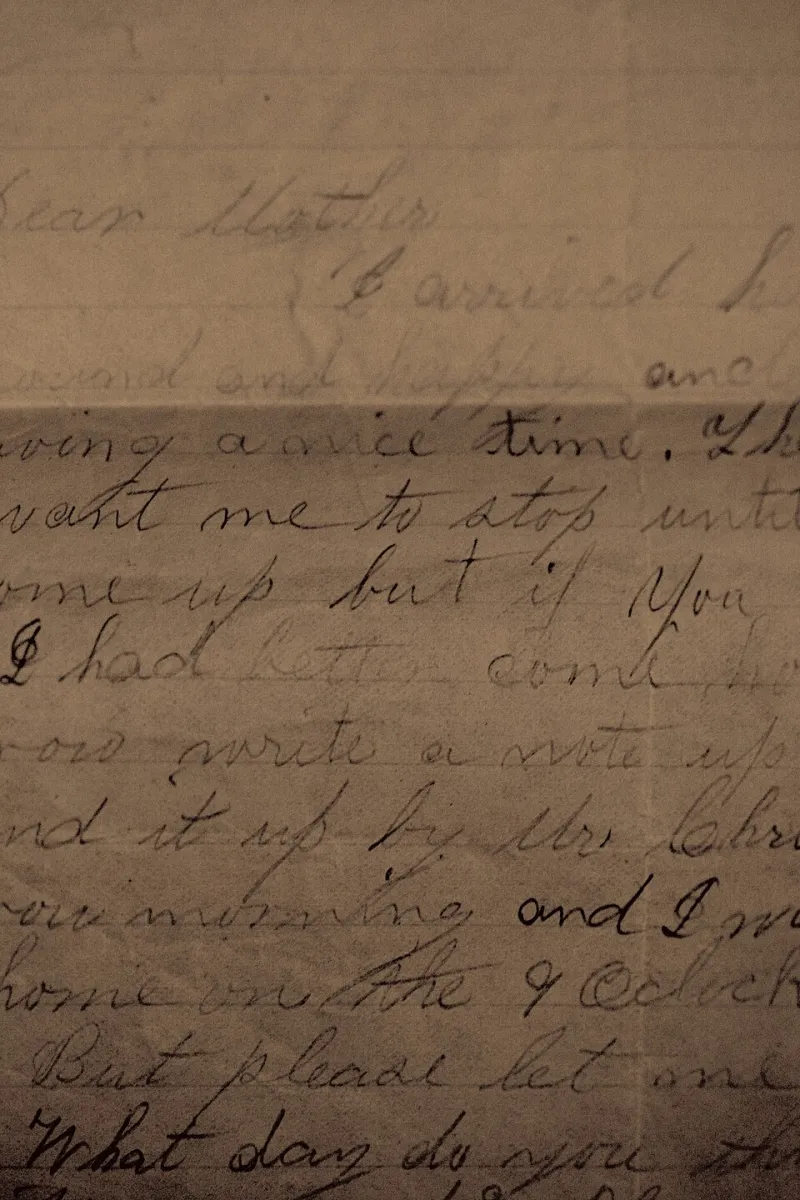
Photo: Pink Sherbet Photography from USA, CC BY 2.0, via Wikimedia Commons
The notion that a writer must leave a place in order to fully understand it is among the oldest and most contested ideas in literary culture. James Joyce famously required the continent of Europe between himself and Dublin before he could render the city with the precision that defines Ulysses. Samuel Beckett made exile — geographical and existential — the very condition of his art. Seamus Heaney's relationship with distance was, characteristically, both more nuanced and more personally felt than either of these predecessors.
When Heaney accepted a visiting professorship at Harvard in the early 1980s and subsequently divided his year between Cambridge, Massachusetts, and his home in Dublin, he entered a new phase of his creative life — one marked not by rupture but by a kind of productive estrangement. The letters, interviews, and reflective prose he produced during this period offer scholars an unusually candid record of how physical displacement reshaped his imaginative relationship with Ireland, with memory, and with the responsibilities of a poet whose identity had always been inseparable from a specific patch of ground.
The Decision to Leave — and What It Cost
Heaney's departure from Belfast in 1972, when he moved his family to County Wicklow following the escalation of violence in Northern Ireland, was itself a form of internal exile that preceded the transatlantic distance of the Harvard years. He wrote about this earlier move with considerable self-scrutiny, conscious that leaving the North at a moment of crisis could be read — by himself as much as by others — as an evasion of communal responsibility.
In published interviews from the mid-1970s, collected in part in Stepping Stones (2008), the book-length interview with Dennis O'Driscoll that remains one of the most invaluable primary resources for Heaney scholarship, he returned repeatedly to this anxiety. The move to Wicklow, he acknowledged, was both a practical decision and a psychological necessity — a withdrawal from an environment in which the pressure to speak as a tribal voice had become artistically suffocating. Distance, even the modest distance of a few hundred miles within the same island, was a condition of his continued integrity as a poet.
The transatlantic move intensified this dynamic. Heaney's letters from the Harvard period — portions of which have entered the public record through published correspondence and the accounts of colleagues and friends — reveal a man acutely conscious of the paradox he inhabited: the further he moved from Ireland, the more Ireland became the subject of his most searching poetic attention.
Nostalgia and Its Discontents
One of the most striking features of Heaney's private correspondence, as it has been made available through various published sources, is his wariness of nostalgia — a wariness that sits in productive tension with the evident emotional pull of home that pervades his writing.
In letters to fellow poets and to members of his family, he distinguished carefully between the legitimate act of memory — the imaginative recovery of the past as a means of understanding the present — and the sentimental falsification that nostalgia, in his view, too easily became. This distinction has its most sustained poetic expression in Station Island (1984), the collection he completed during his early Harvard years, in which the ghost of James Joyce appears as a harsh corrective to any temptation toward consoling myth-making.
Joyce's shade in the poem famously instructs Heaney to 'swim / out on your own and fill the element / with signatures on your own frequency.' The injunction is not merely artistic; it is ethical. It is a rebuke to the kind of Irish identity politics that demands the poet perform solidarity at the expense of honesty. That Heaney placed this instruction in Joyce's mouth — himself the supreme example of the Irish writer who required distance in order to see clearly — suggests how consciously he was working through the implications of his own displacement.
The American Years: Sharpening the Lens
At Harvard, Heaney taught poetry and immersed himself in a transatlantic literary culture that brought him into sustained dialogue with American poets including Robert Lowell, whose influence on his confessional directness he acknowledged, and Elizabeth Bishop, whose capacity for precise, emotionally restrained observation he admired profoundly. This American context did not dilute his Irishness. If anything, it clarified it.
In interviews conducted during the 1980s and preserved in various collections of critical dialogue, Heaney described the experience of teaching Irish poetry to American students as unexpectedly revelatory. Explaining Kavanagh, or Clarke, or the particular textures of Ulster speech, to audiences with no inherited frame of reference forced him to articulate what he had previously assumed — to make the implicit explicit. The archive of his critical prose from this period, including essays later collected in The Government of the Tongue (1988), bears the marks of this clarifying pressure.
His letters home during these years — to his wife Marie, to friends in Dublin and Belfast — are reported by those who received them to have carried a particular quality of attentiveness to the details of Irish life: weather, news, the state of specific roads and fields. The granularity of this attention suggests not the detachment of a man growing away from his origins, but the heightened perceptual acuity of someone who had learned to look at home through the lens of its absence.
The Tension Between Belonging and Reckoning
Perhaps the most significant scholarly insight that Heaney's correspondence and late interviews yield is the degree to which he refused to resolve the tension between belonging and honest reckoning — between love for a place and a clear-eyed acknowledgement of its failures and contradictions.
This refusal is most powerfully dramatised in the elegies and meditative lyrics of The Haw Lantern (1987) and Seeing Things (1991), collections that emerged directly from the Harvard years and their aftermath. The parable poems of The Haw Lantern in particular — spare, allegorical, quite unlike anything in his earlier work — reflect a mind that has gained sufficient altitude to see the familiar landscape from a new angle, without losing the felt knowledge of having walked it.
In Seeing Things, the sequence of sonnets entitled 'Squarings' represents perhaps his most sustained meditation on the relationship between memory, imagination, and the physical world of childhood. These poems do not mourn the past; they interrogate it, turning it in the light with a precision that could only have been achieved by a mind no longer simply inside the experience it was examining.
What the Letters Tell Us
For scholars working with the growing body of Heaney's published correspondence and recorded interviews — resources that the Heaney Archive is committed to documenting and contextualising — the consistent revelation is that Heaney was a deeply self-aware artist who understood the conditions under which he worked best. Distance was not a wound but an instrument.
His letters do not read as the communications of a man in mourning for a lost home. They read as the communications of a man actively thinking — working through, in the informal register of private correspondence, the same questions that his poems address in their more concentrated public form. The relationship between the two bodies of writing is not supplementary; it is symbiotic. To read the letters alongside the poems is to watch the same intelligence operating at different pressures.
Heaney returned to Ireland permanently in his later years, and the County Wicklow and County Derry landscapes reappear in his final collections with the authority of long familiarity. But the distance he had placed between himself and home — the American years, the teaching, the enforced clarity of the outsider — left its permanent mark on his work. It is, ultimately, part of what made him the poet he became.