Heard Before It Is Understood: The Sonic Architecture of Seamus Heaney's Verse
Photo: QueenCityCebu, CC BY-SA 4.0, via Wikimedia Commons
There is a quality in Seamus Heaney's poetry that resists pure intellectual analysis — a quality that must be spoken, breathed, and felt in the throat before it can be adequately reckoned with on the page. Heaney himself articulated this conviction throughout his critical writing, most memorably in his 1995 Nobel lecture, Crediting Poetry, where he recalled the early, pre-rational experience of language as something that arrived through sound before it cohered into sense. This was not a romantic affectation. It was a precise description of how his own verse was constructed: from the inside out, from the phoneme upward.
For students, scholars, and devoted readers in the United Kingdom and beyond, engaging with Heaney's technical mastery of sonic language opens a dimension of his work that purely thematic readings can overlook. His poems do not simply describe the world of rural County Derry, the violence of the Troubles, or the weight of classical myth — they perform these subjects through the very texture of their language.
The Irish Ear: A Linguistic Inheritance
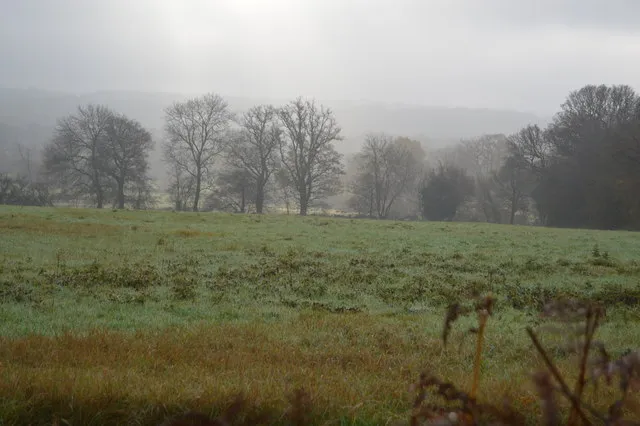
Heaney's sensitivity to sound was not accidental. Growing up in County Derry in the 1940s and 1950s, he was immersed in a linguistic environment that placed enormous value on oral tradition, on the musicality of spoken Irish and the particular cadences of Ulster English. The Irish language, even when not directly spoken, left its imprint on the rhythms and phonological patterns of the communities Heaney knew as a child. He absorbed this inheritance long before he could name it.
In his essay collection Preoccupations (1980), Heaney wrote of his early enchantment with words as physical objects — units of sound possessing weight, texture, and temperature. He described being struck by the word 'Mossbawn', the name of his family's farm, as something that carried its meaning within its sound: the soft, boggy 'moss', the blunt, grounded 'bawn'. This was not merely etymology. It was an early lesson in the inseparability of sound and sense that would define his entire poetic career.
Alliteration as Architecture
Perhaps the most immediately recognisable element of Heaney's sonic technique is his use of alliteration — not as a decorative flourish borrowed from Old English verse, though his engagement with that tradition is well documented, but as a structural principle that binds images and ideas into organic units of meaning.
Consider the opening lines of 'Digging', the poem that inaugurates Death of a Naturalist (1966) and which Heaney himself regarded as a kind of ars poetica: 'Between my finger and my thumb / The squat pen rests; snug as a gun.' The hard consonants — the repeated 'g' sounds threading through 'finger', 'squat', 'snug', 'gun' — create a percussive undertow that reinforces the physical, almost violent act of writing. The pen does not merely rest; it sits with the loaded tension of a firearm. Alliteration here is not decoration. It is argument.
This technique reaches its fullest elaboration in the 'Glanmore Sonnets' from Field Work (1979), where Heaney employs alliterative clusters to enact the very processes he is describing. In Sonnet I, the phrase 'vowels ploughed into other: opened ground' does precisely what it says — the long, open vowel sounds in 'vowels', 'ploughed', 'opened' physically widen the mouth as they are spoken, mimicking the action of a plough turning earth. Sound and metaphor become identical.
Assonance and the Texture of Feeling
If alliteration in Heaney's work tends toward structural force, his use of assonance operates more subtly — as a kind of emotional colouring that saturates a poem's atmosphere without announcing itself. The long, mournful vowel sounds that pervade 'Mid-Term Break', his elegy for his younger brother Christopher, are among the most quietly devastating deployments of assonance in post-war British and Irish poetry.
The poem moves through a sequence of long 'o' and 'oo' sounds — 'knelling', 'snowdrops', 'No gaudy scars', the final, annihilating 'A four foot box, a foot for every year' — that accumulate into a low, keening drone beneath the poem's restrained surface. Heaney never raises his voice. He does not need to. The vowels grieve on his behalf.
This capacity to embed emotion within phonology rather than within explicit statement is what distinguishes Heaney's lyric voice from mere sentiment. The feeling is structural, not applied.
Rhythm, Metre, and the Body of the Line
Heaney's relationship with metrical tradition was neither slavish nor dismissive. He understood formal verse as a resource rather than a constraint, drawing on the iambic pentameter of the English tradition, the stressed alliterative line of Old English, and the looser cadences of American free verse — particularly the influence of Ted Hughes and Robert Frost, both of whom he acknowledged as formative presences.
What is striking, however, is how consistently his lines are shaped by the rhythms of physical labour. The poems of Death of a Naturalist and Door into the Dark (1969) move to the tempo of digging, churning, thatching, and forging. In 'The Forge', the blacksmith's rhythmic hammering is encoded in the poem's own stressed syllables: 'The unpredictable fantail of sparks / Or hiss when a new shoe toughens in water.' The line does not merely describe the forge; it replicates its pulse.
This embodied quality — what Heaney called the poem being 'felt in the mouth' — connects his technical practice to a broader philosophical position. For Heaney, the body was never separate from the mind in the act of poetic making. Language was always, at some level, a physical event.
Sound as Ethical Instrument
It would be a mistake to regard Heaney's sonic mastery as purely aesthetic — a matter of beautiful surfaces. In his poems addressing the violence of the Troubles, particularly those collected in North (1975), sound becomes an ethical instrument, calibrated to navigate the terrible difficulty of bearing witness without exploitation.
In 'Punishment', the poem's slow, heavily assonantal movement — 'I can feel the tug / of the halter at the nape / of her neck' — performs a kind of moral gravity, as though the weight of the sounds themselves insists on accountability. The poem has attracted significant critical debate regarding its political implications, but whatever one's reading, it is impossible to engage with those arguments without first acknowledging how the poem's sonic texture shapes the ethical experience of reading it.
Sound, in Heaney's hands, is never innocent. It carries the full burden of what the poem knows.
A Legacy of the Listening Ear
For contemporary poets working in the United Kingdom and Ireland, Heaney's sonic legacy is both an inheritance and a challenge. He demonstrated that formal technical mastery and genuine lyric feeling are not in opposition — that the most carefully constructed sound-patterning can coexist with, and indeed intensify, the most urgent human subject matter.
The Heaney Archive exists, in part, to preserve and transmit precisely this dimension of his achievement. His poems reward the ear as generously as they reward the eye. To return to them again — aloud, in the mouth, as he would have wished — is to discover, each time, that the music and the meaning were never two things at all.