Rooted in Ground: How Place Became the Defining Language of Heaney's Poetry
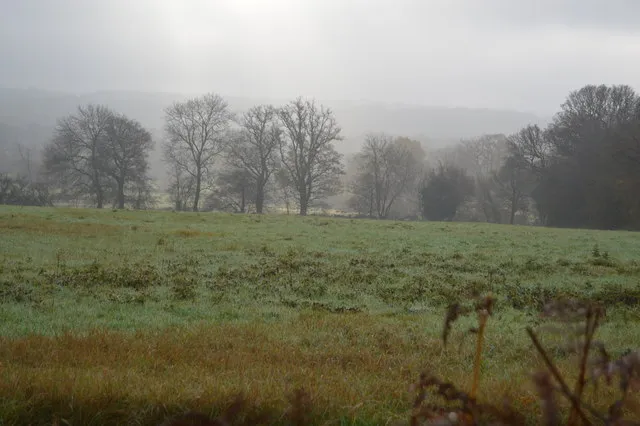
Photo: N Chadwick , CC BY-SA 2.0, via Wikimedia Commons
There is a particular quality of attention that distinguishes the poet who writes from a place as opposed to the poet who writes merely about one. In Seamus Heaney's work, that distinction is everything. The farmland of south County Derry where he was born in 1939, the lanes and hedgerows of his childhood, the peat bogs that bordered his family's land at Mossbawn — these are not settings. They are the very grammar of his imagination, the foundational structures through which he perceived the world and shaped language to describe it.
To read Heaney's poems in sequence, across the arc of his career, is to undertake a kind of geographical pilgrimage. The terrain shifts — from rural Ulster to Dublin, from the west of Ireland to the landscapes of Scandinavia and classical antiquity — but the original ground is never entirely left behind. It persists beneath the later work like bedrock.
Mossbawn: The First World
Heaney returned to Mossbawn, the farm where he spent his earliest years, with a frequency that speaks less to nostalgia than to necessity. In the sequence 'Mossbawn: Two Poems in Dedication', published in North (1975), he conjures the domestic interior of that childhood world with an almost archaeological precision. The 'tick of two clocks' and the 'scullery' with its particular smells are rendered not as sentimental recollection but as elemental fact — the stuff from which a sensibility was made.
What is striking, revisiting these poems now, is how deliberately Heaney refuses the picturesque. The landscape of his childhood is presented as ordinary, even unglamorous: muddy, damp, smelling of earth and livestock. This refusal of romanticisation is itself a form of fidelity. Heaney understood that the truth of a place resides not in its scenic qualities but in its textures, its sounds, its particular weight upon the body and the memory.
The well-known poem 'Digging', which opens his debut collection Death of a Naturalist (1966), is perhaps the most direct statement of this foundational relationship. Watching his father work in the garden from his writing desk, Heaney draws the famous parallel between the spade and the pen — between the physical labour of farming and the intellectual labour of poetry. The poem is a declaration of intent: he will dig too, but with a different instrument, into the same ground.
The Bog as Psychic Territory
If Mossbawn represents Heaney's first geography, the bog represents his most complex and morally freighted one. The midland and northern Irish boglands — those vast, saturated expanses of preserved peat — became, particularly in the collections Wintering Out (1972) and North (1975), a landscape of extraordinary symbolic density.
The bogs were, for Heaney, simultaneously places of preservation and violence. The discovery of Iron Age bodies in Scandinavian and Irish bogs — bodies so perfectly conserved by the acidic peat that their expressions remained legible after two millennia — gave him a means of thinking about history not as abstraction but as physical, recoverable matter. In poems such as 'The Tollund Man' and 'Punishment', the bog becomes a site where past and present collapse into one another, where ancient ritual killing speaks, uncomfortably, to the sectarian violence of the Northern Irish Troubles.
This is not simple allegory. Heaney was always resistant to the demand, placed upon him by some critics and commentators, that he serve as a political spokesman for the nationalist community. His use of the bog poems is more nuanced than that: he is exploring the archaeology of human violence itself, the way in which certain landscapes seem to hold suffering within them, to preserve it as peat preserves organic matter — unchanged, available, and troubling to encounter.
The Move South: Dublin and the Question of Belonging
In 1972, Heaney made the significant and, for some, controversial decision to leave Belfast and move with his family to County Wicklow, and subsequently to Dublin. This geographical shift carried political resonance in a period of acute sectarian tension; some in the northern nationalist community experienced it as a form of abandonment. Heaney felt the weight of this judgement, and it surfaces — with characteristic obliqueness — in the poetry of the period.
Dublin offered him distance, and distance offered perspective. The poems of Field Work (1979), written during his years living near Glanmore in County Wicklow, show a poet deliberately slowing down, attending to the particulars of a new landscape with the same careful eye he had turned on Mossbawn. The Glanmore Sonnets — ten poems addressed to his wife Marie and to the life they were building in the south — are among the most intimate and formally assured poems of his career. In them, the landscape is both refuge and provocation, a place of temporary peace in which the larger questions of identity and belonging are held, not resolved.
Language as Landscape
One of the most revealing aspects of Heaney's relationship to place is the way in which landscape and language become, in his work, effectively synonymous. He was acutely conscious of the way in which the English spoken in Ulster — inflected by Irish, by Scots, by Norse — carried within it the traces of a complex and often violent history of colonisation and cultural exchange.
In poems such as 'Anahorish' and 'Broagh', from Wintering Out, he performs a kind of linguistic archaeology, tracing the Irish roots of place names that had been overlaid by English orthography. 'Anahorish', he notes, means 'place of clear water' — and in dwelling on the sound of the word, its soft consonants and open vowels, he recovers something of the pre-colonial landscape that the name once described. These poems are acts of reclamation, but quiet ones: they do not shout their politics; they murmur them, in the cadences of a language half-remembered.
A Map That Keeps Expanding
In his later collections — Seeing Things (1991), The Spirit Level (1996), and District and Circle (2006) — Heaney's geography expands to encompass the classical world, the landscapes of Virgil and Dante, the underground realms of myth and elegy. Yet even here, the original ground remains present. The title poem of District and Circle, inspired by the London Underground, is also — obliquely, characteristically — about the descent into memory, into the underground of the self.
Heaney died in August 2013, and his final collection, Human Chain (2010), returns with extraordinary tenderness to the landscapes and relationships of his earliest life. The poems are suffused with a sense of leave-taking — not morbid, but clear-eyed, the work of a poet who knew that every place he had inhabited had shaped him, and who wished to acknowledge that debt before departing.
At the Heaney Archive, we hold these poems as evidence of something that the best literature consistently demonstrates: that the local and the universal are not opposites. In Heaney's hands, a field in County Derry becomes a meditation on time, on loss, on the way in which the ground beneath our feet is always, simultaneously, the ground of memory.