One Poem, One Nation: How 'Digging' Became the Gateway to Irish Literature for British Readers
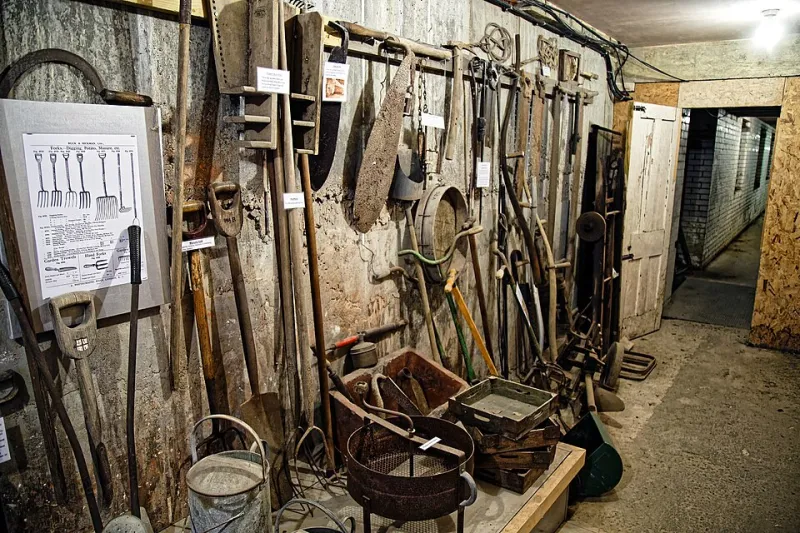
Photo: Acabashi, CC BY-SA 4.0, via Wikimedia Commons
There are poems that accumulate prestige gradually, accruing critical admiration over decades through the patient work of scholars and anthologists. And then there are poems that seem to arrive already complete, already necessary — works that readers recognise, on first encounter, as something they have always needed. Seamus Heaney's 'Digging', the opening poem of his 1966 debut collection Death of a Naturalist, belongs emphatically to the latter category. For British readers in particular, it has functioned less as a poem to be studied than as a door to be walked through.
To understand why this matters, one must appreciate the peculiar position that Irish literature occupied in British cultural life during the mid-twentieth century. Yeats was canonical, certainly, but his mysticism could feel remote. Joyce was admired but seldom loved without effort. Into this landscape, Heaney arrived with a poem about a man watching his father dig a garden, and somehow — through that intimate, sensory, utterly grounded image — he changed everything.
The Poem on the Page
'Digging' opens with one of the most arresting images in post-war poetry: the speaker holding a pen between his finger and thumb, observing how it rests there 'snug as a gun'. The comparison is deliberately unsettling, placing the act of writing in an uncomfortable proximity to violence even before a single line of narrative unfolds. What follows is a meditation on inheritance — the poet watching his father work the garden below, then memory reaching further back to his grandfather cutting turf in Toner's bog. The poem closes with a resolution: the speaker cannot dig with a spade as his forebears did, but he will dig with his pen.
The formal choices are as deliberate as the imagery. The free verse carries the rhythms of speech without surrendering musicality. The diction moves effortlessly between the demotic — 'the squelch and slap / Of soggy peat' — and the lyrical. For British readers encountering Irish writing with little prior context, the poem offered something invaluable: a clear emotional logic, a narrative that required no specialist knowledge of Irish history or mythology, and yet one that opened onto both.
From Belfast to the British Curriculum
The poem's journey into British educational life was neither immediate nor inevitable. It was the 1995 Nobel Prize, as this archive has documented elsewhere, that dramatically accelerated Heaney's presence in British institutions. Yet 'Digging' was already embedded in A-level anthologies well before Stockholm. Its inclusion in the AQA and OCR English Literature specifications across the 1990s and 2000s meant that hundreds of thousands of British secondary school pupils encountered Heaney through this single poem before they encountered him in any other form.
The pedagogical appeal is not difficult to explain. The poem rewards close reading at multiple levels simultaneously. A fourteen-year-old in Manchester or Leeds can respond to the emotional core — a son's admiration for his father — without any knowledge of County Derry's agricultural traditions. A doctoral candidate can then excavate the same lines for their engagement with post-colonial identity, the politics of literary labour, and the construction of an Irish poetic voice distinct from the dominant English tradition. Few poems in the twentieth-century canon possess that range.
British teachers have consistently cited 'Digging' as the poem most likely to produce what one experienced secondary school educator in Sheffield described as 'the moment of connection' — the instant when a student who had previously regarded poetry as an alien art form recognises something true in its lines. That this recognition so frequently arrives via an Irish voice, via images of bogland and turf-cutting, is itself culturally significant.
A Threshold Between Two Literatures
The critical community has long debated the extent to which Heaney's popularity in Britain represented genuine engagement with Irish literature or a more comfortable form of appropriation — the embrace of an Irish poet who felt, to British readers, reassuringly accessible. It is a tension Heaney himself was acutely aware of, and one that inflects much of his critical prose collected in Preoccupations and The Government of the Tongue.
What 'Digging' achieves, however, is more nuanced than simple accessibility. The poem is rooted so specifically in a particular landscape — the County Derry of Heaney's childhood, the precise texture of Irish bogland — that it cannot be absorbed into a generalised 'British' reading without loss. The reader who engages honestly with the poem must follow it into its specificity. They must, in a meaningful sense, travel.
This is why British poets and critics have so often described 'Digging' not merely as a poem they admire but as a poem that changed what they thought possible. The late critic and poet Sean O'Brien once observed that Heaney demonstrated how a poet could be fiercely local and universally legible at the same time — a lesson that British poets of the 1970s and 1980s absorbed with considerable appetite.
The Contemporary Inheritance
Decades on from its first publication, 'Digging' retains a vitality that many poems of its era have lost. In British universities, it continues to feature prominently on introductory literature modules, often positioned as a means of opening conversations about voice, identity, and the relationship between landscape and language. In schools, it remains among the most frequently taught poems in the Heaney canon.
Perhaps more telling is its presence in the reading lives of British writers who have come of age since Heaney's death in 2013. Poets from Northern England, Scotland, and Wales — regions with their own fraught relationships to the dominant literary culture of the south-east — have spoken of 'Digging' as a permission slip: evidence that a poet could write from the margins of a literary tradition and still speak to its centre without compromising the integrity of their own ground.
That is a considerable legacy for a poem of fewer than thirty lines. It is, perhaps, the most concentrated expression of what this archive exists to preserve: the sense that Heaney's voice, rooted as it was in the soil of a specific place and time, continues to do its work long after the hand that held the pen has stilled.