The Poet in the Classroom: Educators Reflect on Teaching Heaney Across British Schools and Universities
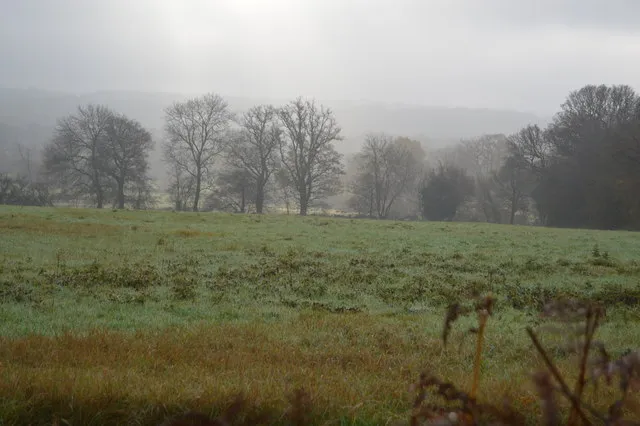
Photo: James Rhoda, CC BY-SA 4.0, via Wikimedia Commons
There are poets who appear on examination syllabuses because tradition demands it. And then there are poets whose work genuinely changes the atmosphere of a room. Teachers who have spent years guiding students through Seamus Heaney's verse tend to describe him in the second category — a writer whose poetry, even when encountered for the first time by a fifteen-year-old in a South London comprehensive or a first-year undergraduate in Edinburgh, has a way of making language feel newly alive.
This article draws on the reflections of educators across British secondary schools and universities to explore what it actually means to teach Heaney, which poems prove most generative in the classroom, and why his work continues to reward both the first reading and the twentieth.
Why Heaney Works in Secondary Education
For teachers preparing students for GCSE and A-level examinations, the challenge of poetry is often one of access. The subject can arrive freighted with anxiety — a sense that poems contain hidden meanings that only the initiated can decode. Heaney, many teachers observe, has an unusual capacity to dismantle that anxiety almost immediately.
A head of English at a comprehensive school in Manchester describes her experience of introducing 'Digging' to Year 10 students: 'The poem does something very clever. It begins with a physical image — a pen resting between finger and thumb — and then widens outwards into memory and family history. Students who might resist poetry on principle find themselves engaged before they realise it, because the poem meets them in the world of ordinary objects and ordinary actions.'
This quality of ordinariness transformed is, by most accounts, central to Heaney's pedagogical value. His subjects — farmwork, childhood, the texture of rural Irish landscape — are specific, yet the emotional and philosophical terrain they open onto is broad enough to accommodate a wide range of student experiences. A student who has never seen a peat bog can nonetheless recognise the weight of inherited labour, the complexity of a child's admiration for a parent, the strange intimacy of watching someone work with their hands.
The Poems That Resonate Most
Ask educators which poems they return to most reliably, and certain titles recur with striking consistency. 'Mid-Term Break', with its restrained account of a child's death and a family's grief, is described by multiple teachers as one of the most teachable poems in the English language. Its final couplet — arriving with the precision of a closing door — never fails to produce a genuine reaction, even from students who arrived in the classroom convinced that poetry was not for them.
'Blackberry-Picking' generates similarly productive discussions, particularly around the tension between the pleasure of abundance and the inevitability of decay. A lecturer in English literature at a university in the West Midlands notes that the poem functions almost as a primer in close reading: 'Every word is doing work. Students who engage with it carefully come away with a much more sophisticated understanding of how compression and imagery operate in verse. It's a short poem, but it teaches a great deal.'
At A-level, where students are expected to engage with a wider body of work, 'The Tollund Man' and the broader sequence of bog poems tend to provoke the most sustained discussion. The intersection of archaeology, violence, and lyric beauty that characterises these poems opens onto questions about history, memory, and the relationship between the personal and the political that are both academically rigorous and genuinely urgent.
Navigating the Northern Irish Context
Teaching Heaney in British classrooms inevitably raises questions about context — specifically, the political context of the Northern Irish Troubles that shadows much of his work. This presents a pedagogical challenge that educators approach with varying degrees of directness.
A teacher at a grammar school in Yorkshire reflects: 'Some students arrive with very little knowledge of Irish history, and there is always a question of how much context to provide before you risk flattening the poem into a history lesson. Heaney himself was wary of poetry being conscripted into political argument. I try to teach the tension rather than resolve it — to help students sit with the discomfort of a poem that is simultaneously about a specific historical moment and about something much larger.'
At university level, this contextualisation becomes more expansive. Seminars that place Heaney alongside contemporaries such as Paul Muldoon or Michael Longley, or that situate his work within the broader tradition of Irish poetry from Yeats onwards, allow students to understand his achievement in its full complexity. The risk of treating Heaney in isolation — as simply a poet of rural childhood or of landscape — is that his formal sophistication and his engagement with difficult political questions can be underestimated.
Heaney as a Gateway to Poetry More Broadly
Perhaps the most consistent observation made by educators across all levels is that Heaney functions not merely as a subject of study but as a gateway. Students who are moved by 'Mid-Term Break' find themselves willing to try Plath. Students who engage with the formal architecture of 'The Forge' become curious about how other poets use the sonnet tradition. The accessibility that characterises Heaney's surface does not diminish his depth; it invites readers further in.
A university lecturer in Scotland puts it plainly: 'I have seen students who arrived convinced that poetry was an obligation discover, through Heaney, that it is a pleasure. That transformation is the most important thing that can happen in a literature classroom. Once it occurs, everything else becomes possible.'
For an archive committed to preserving and extending Heaney's legacy, this pedagogical dimension of his work is not incidental — it is central. The voice that Heaney found over a lifetime of writing continues to find new listeners in classrooms across Britain, and the educators who guide those encounters are, in their own way, keeping the archive alive.