A Prize That Echoed Across Generations: The Cultural Aftershock of Heaney's 1995 Nobel
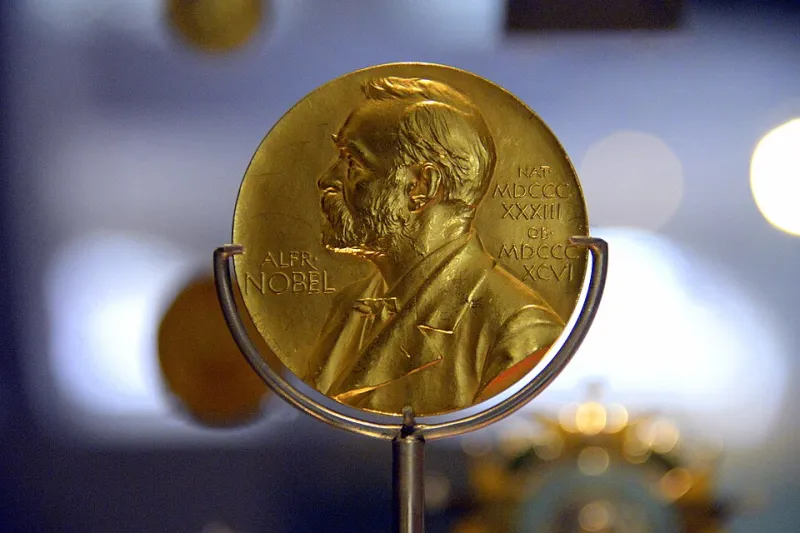
Photo: Osama Shukir Muhammed Amin FRCP(Glasg), CC BY-SA 4.0, via Wikimedia Commons
When the Swedish Academy announced on 5 October 1995 that Seamus Heaney was to receive the Nobel Prize in Literature, the news arrived with the particular weight that only a handful of cultural moments can carry. Heaney was cited for works of lyrical beauty and ethical depth, a formulation that captured something his readers had long understood. Yet the prize was not merely a confirmation of individual genius. It was a seismic event in the history of Irish letters, one whose tremors are still detectable nearly three decades later.
The Moment and Its Immediate Meaning
In 1995, Ireland occupied a peculiar and charged position in the British and European imagination. The peace process in Northern Ireland was fragile, the Celtic Tiger economy was only beginning to stir, and the island's cultural exports — music, fiction, drama — were gaining international traction with a new urgency. Into this moment stepped Heaney, already the most celebrated Irish poet since Yeats, now formally anointed by the world's most prestigious literary institution.
The reaction in Ireland was, by most accounts, one of profound communal pride. Bookshops across Dublin, Belfast, and Cork reported immediate surges in sales. Newspapers devoted front pages to a poet — a genuinely rare occurrence. In Northern Ireland specifically, where Heaney had long navigated the impossible pressures of writing amid conflict without becoming a propagandist for either tradition, the prize carried a resonance that went beyond the literary. It was a form of recognition that the region's complexity, its grief and its beauty, deserved the world's attention.
In Britain, the response was equally warm, though inflected with a slightly different character. Heaney had long been a presence in the British literary establishment — shortlisted for the Booker Prize for his prose, taught on A-level syllabuses, admired by poets from Ted Hughes to Carol Ann Duffy. The Nobel confirmed what many had already privately believed: that the finest English-language poet of the late twentieth century was Irish, and that the relationship between British and Irish literary cultures was one of profound mutual influence rather than simple hierarchy.
Publishing, Academia, and the Heaney Effect
The commercial and institutional consequences of the Nobel were swift and substantial. Faber and Faber, Heaney's long-standing publisher, immediately reprinted his collected works to meet demand. Opened Ground, a career-spanning selection published in 1998, became a fixture on reading lists across British and Irish universities. The prize, in effect, transformed Heaney from a critically revered poet into a genuinely popular one — the kind of writer whose books could be found not merely in specialist poetry sections but in airport terminals and supermarket shelves.
For British academia, the Nobel provided institutional momentum for the serious scholarly study of Irish poetry more broadly. University departments that had previously treated Irish literature as a peripheral specialism began to integrate it more centrally into their curricula. Heaney's win was a catalyst: if one Irish poet could command global recognition on this scale, the argument for sustained scholarly engagement with the wider tradition became significantly easier to make. Journals dedicated to Irish literary studies expanded their readerships; postgraduate research into Heaney's contemporaries — Paul Muldoon, Medbh McGuckian, Ciaran Carson — gained both prestige and funding.
Opening Doors for a Generation
Perhaps the most enduring consequence of the 1995 prize was the space it created for subsequent generations of Irish writers. Publishers, literary agents, and prize committees became more receptive to voices from Ireland, both north and south. The Nobel had effectively demonstrated that Irish poetry was not a niche interest but a living tradition capable of speaking to universal human concerns.
Poets who emerged in the years following Heaney's win have spoken openly about the psychological permission his success granted them. To write in and from Ireland — about its landscapes, its histories, its complicated relationships with language and identity — was no longer to risk obscurity. Heaney had shown that such writing could reach the world without sacrificing its particularity. In this sense, his Nobel was not an ending but an opening.
The prize also affected the relationship between Irish and British literary institutions in subtler ways. The Forward Prize, the Costa Poetry Award, and the T.S. Eliot Prize all saw increased submissions from Irish poets in the years that followed. The boundary between 'British' and 'Irish' poetry, never entirely stable, became still more porous. Heaney himself had always resisted the reduction of his work to a single national identity, insisting on poetry's capacity to transcend the borders that politics draws.
Three Decades On: The Legacy Assessed
To assess Heaney's Nobel legacy in the present moment is to confront a paradox. His influence is everywhere — in classrooms, in anthologies, in the language that poets and critics use when they speak about the relationship between place and voice — yet there is also a risk that the very scale of his reputation can obscure the work itself. The archive of scholarship surrounding his poetry is now vast, and there is always a danger that institutional canonisation dulls the very qualities — the surprise, the intimacy, the formal precision — that made the work extraordinary in the first place.
What remains most vital about the 1995 Nobel, viewed from the vantage point of nearly three decades, is not the prize itself but the conversation it initiated. It asked British and international audiences to look again at Irish literature — not as a footnote to the English tradition, not as a curiosity, but as a living, formally ambitious, morally serious body of work. That conversation has never really closed. The doors Heaney opened remain open, and the writers who have walked through them continue to extend a tradition that, in 1995, the world was finally invited to see whole.