From Mossbawn to the Bog of Allen: A British Pilgrim's Route Through Heaney Country
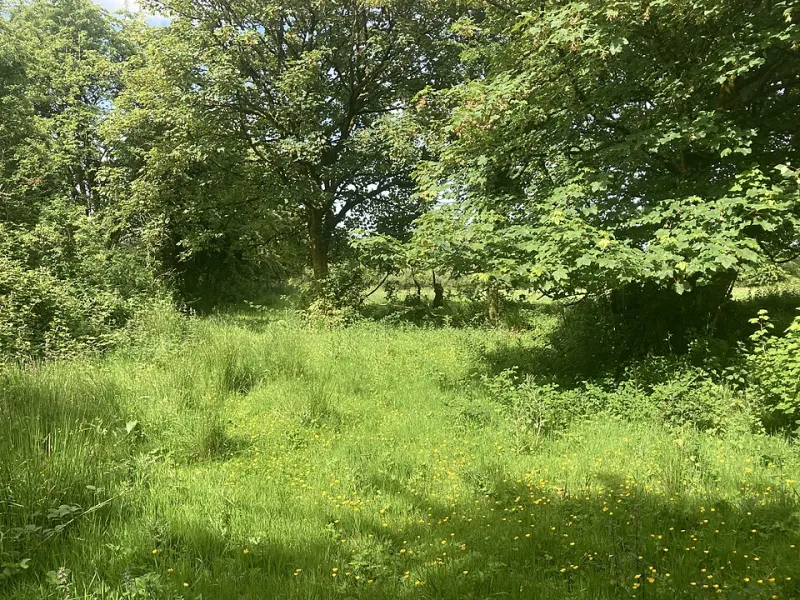
Photo: Ballinlough, CC BY-SA 4.0, via Wikimedia Commons
Every year, thousands of British students memorise lines about a spade sinking into gravelly ground, or a ferry crossing to Lough Beg — often without ever standing on the soil that produced them. Yet Heaney country is barely an hour's flight from most of England, and considerably closer for those in the north of England or Scotland who can take the ferry from Cairnryan to Larne. For the reader willing to make the journey, the poems stop being texts and become directions.
Beginning at Mossbawn
The natural starting point lies some thirty miles north-west of Belfast, between Castledawson and Toomebridge in County Derry. The original Mossbawn farmhouse where Heaney was born in 1939 no longer stands in its original form, but the surrounding ground — the flax-dam country of 'Death of a Naturalist', the lanes and hedges of his earliest collections — remains stubbornly intact.
The practical centre of any visit is the Seamus Heaney HomePlace in Bellaghy, the village where the family moved when the poet was fourteen. Opened in 2016 and run with characteristic care, the centre houses recordings, artefacts, and the recreated study from the Dublin house, complete with the desk and the pens he famously favoured. Allow a full morning. The exhibition's audio stations, drawn from the poet's own readings, reward unhurried attention — and they prepare the ear for the landscape outside.
From Bellaghy, the short drive to the Bann valley passes through terrain that reads like a collected works laid flat: the 'vowel of moss' Heaney heard in the local placenames, the potato drills, the soft rain that never quite becomes weather worth remarking on locally.
South to the Bog of Allen
The second leg of the pilgrimage requires a longer journey — down through the Republic, towards the midlands that produced the bog poems. The Bog of Allen, straddling Kildare and Offaly, is the psychogeographical heart of North: the terrain of the Tollund Man's imagined cousins, the 'black butter' of the earth's own preserving.
Much of the raised bog has been harvested or cut away over the past century, and the visitor should temper expectations accordingly. What remains, however, is remarkable. Lullymore West and the areas around Clonbullogue offer boardwalk access onto living bog surface; Girley Bog in Meath provides an alternative for those approaching from Dublin. Stand on the springy, unreliable ground and the poems' central metaphor — a land that keeps its dead, a memory stored in peat — becomes less a symbol than a physical fact underfoot.
Reading as Navigation
The temptation on such a trip is to treat the poems as a checklist. A better approach, and one the HomePlace itself encourages, is to let individual collections govern individual days. Death of a Naturalist belongs to the Derry landscape; North to the bogs and the coastal north Antrim coast, where the drive along the Causeway Coast — with its 'ocean's bowl of brine' — pairs naturally with the Viking and colonial anxieties of that book. Station Island demands a detour to Lough Derg in Donegal, should the schedule allow.
British visitors will notice, often uncomfortably, how much of the landscape carries the marks of the Troubles that Heaney wrote through rather than about. The border country between Derry and Tyrone, with its army checkpoints now vanished into memory, gives 'The Other Side' and 'The Toome Road' their full weight in a way no classroom can.
Practical Notes for the Traveller
Direct flights from Manchester, Birmingham, Edinburgh and London to Belfast and Dublin make the trip feasible in a long weekend. From Belfast, the A6 to Derry passes within minutes of Bellaghy. Train travel is viable to Castlerock or Coleraine for the north coast leg; a hired car remains the most sensible option for the boglands further south.
Accommodation in Bellaghy itself is limited, but Magherafelt and Ballymena offer comfortable bases. The HomePlace hosts a regular programme of readings and schools events — booking ahead is advisable, particularly around the August anniversary of the poet's death.
Why the Journey Matters
There is a school of criticism that distrusts literary tourism, suspecting it of reducing art to scenery. Heaney himself would likely have been more generous. His entire poetics — the 'credit' due to reality, the conviction that words and ground are secretly related — argues that a reader who has felt bog underfoot, or heard the Bann move slow past the fields, understands the verse differently.
For UK readers in particular, the journey carries an extra resonance. Heaney spent much of his career explaining Ireland to Britain, and Britain to itself. Walking his ground is, in a modest way, completing that conversation in person — the anthology finally opened onto the landscape that wrote it.