Before the Cassette Fades: The Hunt for Seamus Heaney's Unofficial Recordings
A Voice Scattered Across the Country
The National Library of Ireland holds its treasures. The BBC Sound Archive keeps its reels. But ask any serious Heaney scholar where the poet's voice truly lives, and they will speak of stranger places: a cardboard box in a Belfast attic, a reel-to-reel recording in a Midlands polytechnic's forgotten cupboard, a festival organiser's desk drawer stuffed with cassettes labelled in biro.
Seamus Heaney gave thousands of readings in his lifetime — village halls in Yorkshire, arts festivals in Aldeburgh, lecture theatres from Galway to Guildford. Only a fraction of those performances were ever formally recorded, and fewer still found their way into institutional care. The rest survive by accident, scattered among the people who happened to be in the room.
What the Page Cannot Hold
Anyone who attended a Heaney reading describes the same ritual: the slight pause before the first line, the Derry cadence turning every 'a' into something rounder, the dry aside delivered deadpan before a poem's final turn. His delivery was not decoration. It was interpretation.
Consider 'Digging' on the page and you have a masterwork of form. Hear Heaney read it — as tens of thousands did at readings across the UK in the 1970s and 1980s — and the poem becomes a spoken inheritance, the rhythm of the spade audible in the voice itself. Scholars have long argued that his readings constitute a distinct interpretive act, closer to translation than recitation. Yet the evidence for that argument lies largely in unofficial recordings that no institution has catalogued.
The Fragility of Magnetic Memory
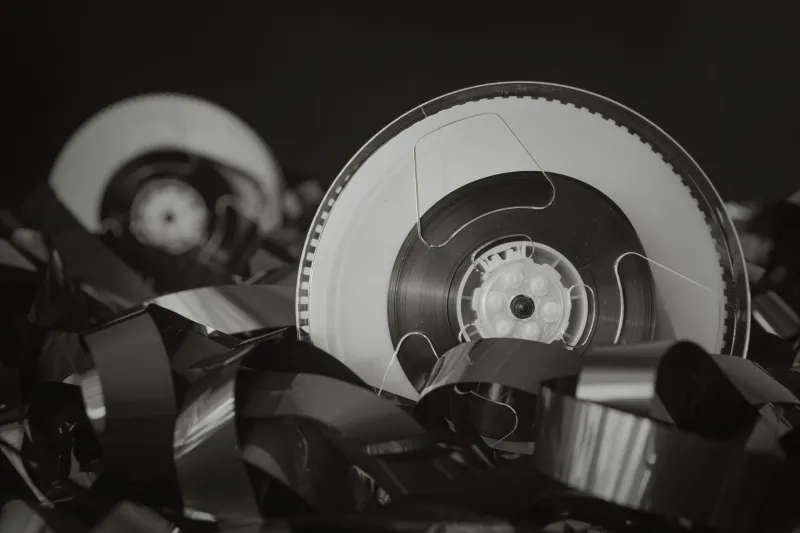
The problem is chemistry. Magnetic tape degrades. Home cassettes, often recorded on cheap portable machines balanced on folding chairs, suffer from print-through, dropouts and brittle splices. Every year that passes makes the sound less recoverable.
Dr. Margaret Ellison, an archivist who has worked on oral history projects across the North of England, puts it plainly: 'We lose perhaps a fifth of unrecorded folk material each decade. Poetry readings are no different. The difference is that people don't yet think of them as artefacts.'
Her view is echoed by collectors. One retired schoolteacher from Leeds, who asked not to be named, keeps four recordings of Heaney's 1979 reading at a Yorkshire literature festival — tapes he made on a machine borrowed from the school where he taught. 'I wrote to him once, asking if he'd mind,' he recalls. 'He sent back a postcard saying the more ears the better.'
Why Digitisation Cannot Wait
There is precedent for rescue. The British Library's Sound Archive has run urgent digitisation programmes for endangered recordings, and university collections in Durham and Edinburgh have quietly transferred decaying lecture tapes in recent years. But these efforts are piecemeal, dependent on individual initiative rather than coordinated policy.
A proper survey of unofficial Heaney recordings — an appeal to festivals, local radio stations, schools and private collectors — would cost little by the standards of major digitisation projects. The alternative is a slow, silent loss: performances that shaped how a generation of British readers understood Irish poetry, eroding in shoeboxes and garages.
Memory as the Last Archive
And then there is the audience itself. Attendees in their seventies and eighties carry recollections no tape can supply — the heckler in Sheffield, the reading postponed by a power cut in Cork, the poem Heaney dedicated to a nurse in the front row. Recording these testimonies is as urgent as rescuing the tapes, for together they form a fuller record of the poet in performance than any institution possesses.
Heaney once wrote of the 'music of what happens' — the ordinary sound of a life being lived. Those sounds, captured imperfectly on magnetic tape by people who simply wanted to keep a piece of the evening, deserve the same permanence we grant his printed words. The window for saving them is narrowing. It will not stay open indefinitely.