From Derry to the Desk: How Heaney Became the Poet Every British Teenager Must Know
Photo: Richard Sutcliffe , CC BY-SA 2.0, via Wikimedia Commons
There is a particular kind of immortality reserved for writers whose words are encountered not by choice but by obligation. It is the immortality of the syllabus — of the dog-eared anthology, the annotated margin, the timed essay written under fluorescent light. Seamus Heaney, who spent a lifetime resisting easy categorisation, has arrived at precisely this destination. He is, by any measure, the most consistently examined poet in British secondary education. How that happened is a story worth telling carefully.
The Institutional Moment
Heaney's gradual absorption into the English literature curriculum did not occur overnight, nor did it follow a single decisive mandate. Rather, it was the product of accumulated institutional decisions made across several decades, beginning in earnest during the 1980s and accelerating sharply after his Nobel Prize in 1995. Examination boards — AQA, Edexcel, OCR, and their predecessors — began incorporating individual poems into GCSE and A-level anthologies during a period when curriculum designers were actively seeking voices that could speak to questions of identity, memory, and language in ways that felt both accessible and literarily substantial.
Heaney satisfied both requirements with unusual efficiency. Poems such as Digging, Mid-Term Break, and Storm on the Island offered what curriculum architects prized above almost everything else: emotional legibility combined with formal complexity. A fifteen-year-old encountering Mid-Term Break for the first time could grasp its grief immediately; the same student, guided by a skilled teacher, could then discover its intricate architecture of delayed revelation. That combination — the poem that yields quickly but rewards prolonged attention — is extraordinarily rare, and examining bodies recognised it.
Dr Patricia Hennessey, a former curriculum adviser to one of the major awarding organisations, has noted in published interviews that Heaney's work was repeatedly returned to during anthology selection meetings not because of any single champion but because of a broad consensus. 'He kept rising to the top,' she observed, 'because he answered so many of the questions the curriculum was trying to ask.'
The Nobel Effect and Its Institutional Consequences
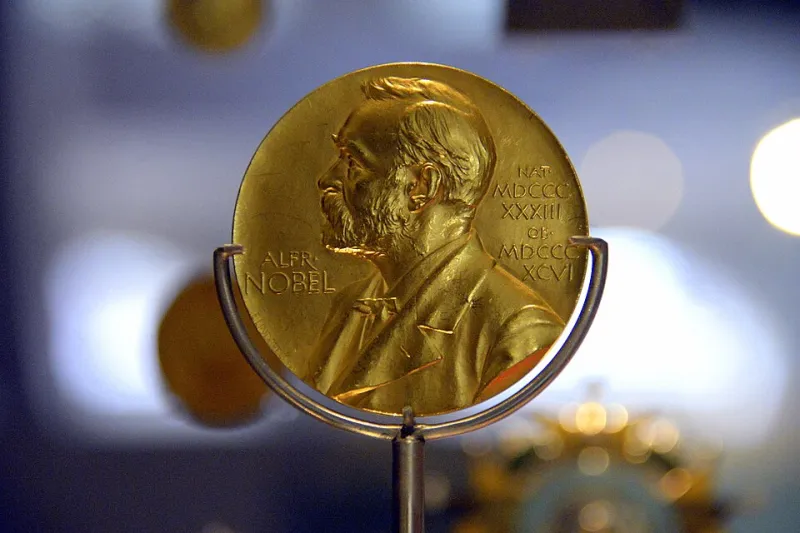
If Heaney's pre-Nobel presence on British syllabuses was significant, the 1995 prize transformed it into something approaching dominance. The Nobel committee's citation — which praised his work for its 'lyrical beauty and ethical depth' — provided examination boards with precisely the kind of external validation that institutional bodies find difficult to resist. Within two academic years of the award, Heaney's representation across GCSE and A-level specifications had increased measurably. Publishers accelerated the production of study guides and classroom editions. The machinery of educational publishing, once set in motion, proved self-reinforcing.
This is not, it should be said, a cynical observation. The poems themselves warranted the attention. But the speed and comprehensiveness of Heaney's curricular ascent owed as much to institutional momentum as to purely literary judgement. By the early 2000s, it had become almost impossible for a British student to complete their secondary education without encountering his work in a formal, assessed context.
Voices in the Classroom: Enrichment and Exhaustion
The consequences of this ubiquity are contested. Speak to teachers who have taught Heaney for thirty years and many will describe the experience in terms of sustained discovery — poems that continue to yield new readings, that generate genuine discussion, that connect students from Manchester or Birmingham to landscapes and histories they might otherwise never encounter. The bog poems, in particular, have proven remarkable pedagogical tools, capable of opening conversations about archaeology, violence, memory, and moral responsibility that extend far beyond the text.
Yet a different conversation has been gathering force in staffrooms and on educational forums. Some teachers report a creeping fatigue — not with Heaney's poetry itself, but with the narrowness of the interpretive frameworks that high-stakes examination tends to impose upon it. When a poem must be read against a mark scheme, its wildness is inevitably domesticated. The fear, articulated by a number of English teachers in recent years, is that the very qualities that make Heaney's work extraordinary — its refusal of easy consolation, its linguistic strangeness, its rootedness in a specific and contested place — are precisely the qualities most vulnerable to being smoothed away by the demands of assessed reading.
Students, too, offer divided testimony. For many, particularly those who encounter a teacher with genuine enthusiasm for the work, Heaney remains a transformative presence — a poet who makes language feel urgent and alive. For others, the sheer weight of examination expectation has produced something closer to aversion. 'I read Digging four times in two years,' one former A-level student remarked in an online discussion thread widely circulated among English teachers. 'By the end, I couldn't hear it any more.'
The Question of Representation
There is a further dimension to this debate that sits somewhat uncomfortably alongside the celebration of Heaney's canonical status. His dominance within the British curriculum has, critics argue, come at a cost to the broader range of Irish and indeed British poetry. When a single voice occupies so much of the available curricular space, other voices necessarily recede. The richness of twentieth-century Irish poetry — Eavan Boland, Michael Longley, Ciaran Carson, Nuala Ní Dhomhnaill — remains largely invisible to most British secondary students, not because it is inaccessible but because the architecture of the curriculum rarely makes room for it.
This is not Heaney's doing, of course, and it would be perverse to hold the poet responsible for decisions made in awarding body offices and government consultation documents. But it is a consequence of his canonical elevation that deserves honest acknowledgement.
What Endures
None of this diminishes the achievement. That a poet from County Derry, writing from within a tradition that British culture had long regarded as peripheral, should become the figure through whom hundreds of thousands of British teenagers first encounter serious poetry — that is, by any reckoning, a remarkable cultural event. The Heaney Archive exists, in part, to honour that achievement and to ensure that the richness of his work is not flattened by its own ubiquity.
The challenge now, for teachers, curriculum designers, and students alike, is to find ways of reading Heaney that restore to his poems the difficulty and strangeness that made them worth teaching in the first place. The exam hall need not be the end of the encounter. For many students, it has proven to be only the beginning.