The Art of Refusal: Commissions Seamus Heaney Declined and What His Silences Reveal
Photo: Association phonétique internationale, Public domain, via Wikimedia Commons
In the economy of literary reputation, silence is rarely neutral. A poet of Seamus Heaney's stature attracted commissions, requests, and invitations in extraordinary volume throughout his career — from governments, cultural institutions, newspapers, broadcasters, and fellow artists. He accepted a great many of them. He also declined a remarkable number, and the pattern of those refusals constitutes a kind of negative autobiography: a portrait of the poet drawn not in ink but in the act of setting the pen aside.
For scholars and archivists working with Heaney's papers — held in part at Emory University in Atlanta and at various Irish institutions — this record of resistance has become an increasingly rich area of inquiry. What emerges from a careful reading of the correspondence and documented accounts is not the image of a reclusive or difficult artist, but of a poet with an unusually disciplined sense of what his voice was and was not suited to express.
The Public Occasion and Its Demands
Among the most frequently documented categories of refusal concerns what might broadly be termed 'public occasion' poetry — verse commissioned to mark state events, civic anniversaries, or moments of national significance. Heaney was deeply sceptical of the laureate impulse, even as he occupied positions of considerable literary authority, including the Oxford Professorship of Poetry, which he held from 1989 to 1994.
His reservations were not merely temperamental. They were grounded in a coherent aesthetic position, articulated most clearly in his critical writing. In The Government of the Tongue, Heaney argued that poetry's authority derived precisely from its autonomy — its refusal to be conscripted by any agenda, however well-intentioned. A poem written to order, he suggested, risked becoming a performance of feeling rather than an expression of it. The distinction mattered enormously to him.
This philosophy made certain invitations almost impossible to accept. When approached to contribute commemorative verse for significant political milestones in the Republic of Ireland during the 1990s — a period of considerable national self-examination — Heaney is documented as having declined on grounds that the occasion required a kind of public voice he did not believe he possessed, or rather, did not believe served the work. He was not indifferent to Irish politics; his poetry demonstrates the opposite. But he was acutely alert to the difference between a poem that engaged with political reality on its own terms and one that was deployed in service of a predetermined message.
The British Dimension
For UK readers, perhaps the most compelling strand of this archival story concerns Heaney's relationship with British cultural institutions. His position was inherently complex: celebrated and widely read in Britain, yet acutely conscious of the political freight that any too-comfortable identification with British cultural life might carry. This tension produced several well-documented moments of principled refusal.
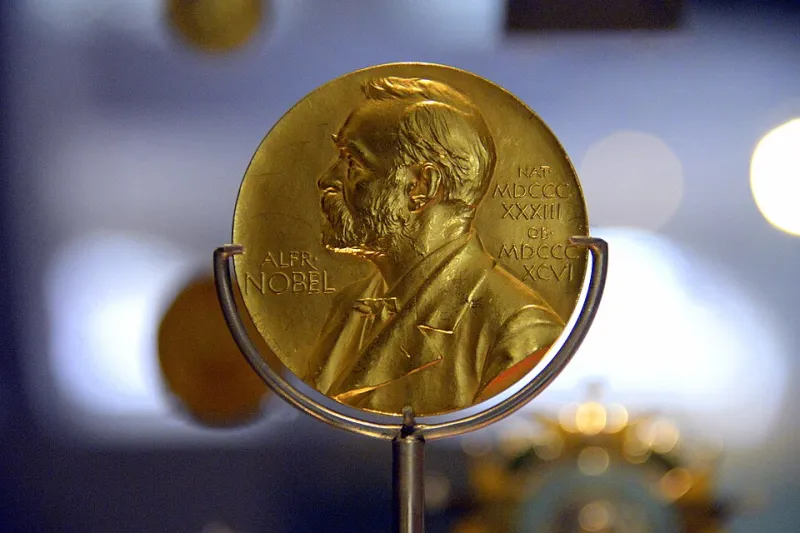
The most discussed of these concerns the offer of an OBE, which Heaney declined. While the poet himself rarely spoke directly about this decision, the refusal was consistent with a broader pattern of maintaining careful distance from the apparatus of British cultural recognition. This was not hostility — Heaney had deep friendships with British poets and maintained warm relationships with British publishers, editors, and critics throughout his life. It was, rather, a considered act of self-definition. To accept such honours would have been to allow others to frame his identity in ways that conflicted with his own understanding of what he represented.
Similarly, there is credible evidence in the archival record of Heaney declining invitations to contribute to British national occasions — jubilees, commemorations, and the like — where his participation might have implied an endorsement he was not prepared to give. These decisions were made quietly, without public statement, which is itself characteristic. Heaney's refusals were almost never polemical. They were enacted through absence rather than declaration.
When the Subject Was Too Close
A different order of refusal appears in accounts relating to the Troubles. Heaney was under considerable pressure, throughout the 1970s and 1980s, to become a more explicitly political poet — to use his growing platform to make direct interventions in the conflict that was devastating communities in Northern Ireland. He resisted this pressure consistently, and the resistance cost him, drawing criticism from republican quarters and occasional impatience from those who felt that his oblique, archaeological approach to political violence was a form of evasion.
His response to these pressures, documented in interviews and letters, was characteristically measured. He distinguished between the poet's responsibility to bear witness — which he accepted fully — and the demand that poetry become propaganda, however righteous. The bog poems of North (1975) represented his most sustained attempt to find a form adequate to the violence of his time without surrendering the poem's integrity to the urgencies of the moment. That he declined to go further, to write more directly, more combatively, was itself a kind of commission refused.
There were also more private refusals — elegies he was asked to write for individuals, memorials for occasions too raw or too contested to permit the necessary creative distance. Heaney believed that elegy required time, that grief needed to settle before it could be worked into lasting form. He was not always able to provide what was asked of him when it was asked, and he appears to have said so with candour in his correspondence.
What the Silences Teach Us
The scholarly value of attending to these refusals extends beyond biographical curiosity. Taken together, they illuminate the principles that governed Heaney's entire creative life: a commitment to authenticity over occasion, to the long duration of a poem over the short urgency of an event, to the integrity of a voice that could not be borrowed out without being diminished.
For readers in Britain, where Heaney's work is often encountered first through the educational canon — anthologised, examined, celebrated — there is something instructive in the reminder that his presence in that canon was itself selective. He chose, repeatedly and deliberately, the works he was willing to place before the world and the invitations he was willing to accept. The archive preserves not only what he wrote but the shape of what he withheld, and that shape is, in its own way, as eloquent as the poems themselves.
To study Heaney's refusals is, ultimately, to understand his acceptances more fully. Every poem he published represents not only a creative achievement but a decision — a choice to speak, made against the background of all the occasions on which he judged silence the more honest response.