A Single Voice, A Whole Tradition: How Seamus Heaney Became Britain's Window onto Irish Poetry
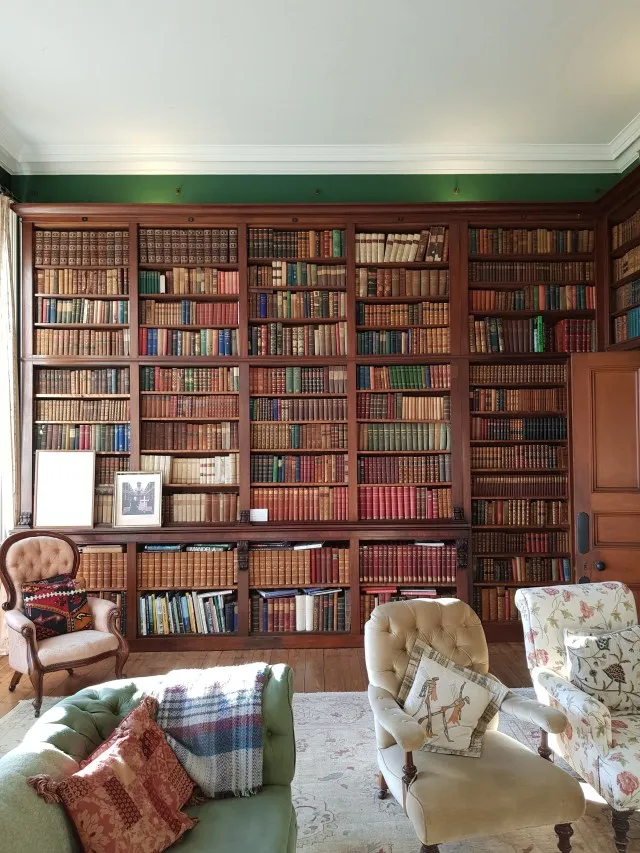
Photo: Irish landscape poetry books library shelves literary archive, via i0.wp.com
When British secondary school pupils open an anthology of poetry for the first time, the name they are most likely to encounter from the island of Ireland is Seamus Heaney. When undergraduate students begin a survey course in twentieth-century verse at a Russell Group university, Heaney typically appears early and at length. When literary prizes announce their longlist and a poem rooted in the boglands of County Derry is among them, audiences across the UK respond with a sense of comfortable recognition. This is the Heaney effect — a phenomenon that is at once a testament to extraordinary artistic achievement and a question worth examining with some care.
The Making of a Literary Ambassador
Heaney's arrival in the British literary consciousness was neither accidental nor purely organic. His move to Belfast in the 1960s, followed by his association with the Group — a workshop circle that included poets such as Michael Longley and Derek Mahon — placed him within a network that had direct lines to London publishers and critics. Faber and Faber, the house that had published T. S. Eliot and Ted Hughes, became his publisher with Death of a Naturalist in 1966, and that single institutional alignment carried enormous symbolic and practical weight.
Faber's imprimatur signalled to British literary culture that here was an Irish poet whose work could be received within an existing framework of seriousness and craft. The press's catalogue functioned almost as a canon in itself, and Heaney's inclusion within it granted him a visibility that poets published by smaller or more regionally focused houses rarely enjoyed. This was not manipulation; it was the ordinary machinery of literary reputation. But its consequences proved far-reaching.
Accessibility Without Condescension
One reason Heaney became so teachable — and therefore so widely taught — is the particular quality of his accessibility. His early poems, grounded in the physical textures of rural County Derry, offer readers immediate sensory entry points: the cold smell of potato mould, the sucking noise of a spade cutting turf, the weight of a grandfather's silence. These are images that do not require specialist knowledge to apprehend. A student in Manchester or Edinburgh, with no connection whatsoever to the Irish countryside, can feel the heft of the language before they fully understand its cultural coordinates.
Yet this accessibility is never simplistic. Beneath the domestic surfaces of poems such as Digging or Follower lie questions about inheritance, vocation, and the legitimacy of intellectual labour in a working community. Teachers and lecturers have long appreciated that Heaney's verse rewards multiple levels of engagement: it works for a first reading at GCSE and sustains doctoral-level analysis. This scalability is rare, and it has made him an almost indispensable presence on British syllabi for decades.
The Role of Cultural Diplomacy
Heaney's own conduct — his measured public statements, his willingness to engage with British audiences without either flattering or alienating them, his careful navigation of the Troubles — contributed substantially to his reception. He famously resisted being conscripted into simplistic political narratives, insisting on the complexity of his position as a Catholic Northern Irish poet living and working in a contested cultural landscape. British readers and institutions, often uncertain how to engage with Irish political realities, found in Heaney a voice that invited understanding rather than demanding allegiance.
This diplomatic quality was not evasion. Poems such as Punishment and The Tollund Man engage with violence, atrocity, and moral complicity with unflinching seriousness. But they do so through a mythological and archaeological register that creates sufficient distance for contemplative reading, rather than the immediate discomfort of direct political address. British audiences could engage with the gravity of Irish history without feeling personally implicated — a dynamic that, for better or worse, facilitated Heaney's broad acceptance across the cultural establishment.
A Dominant Voice and Its Consequences
The question that any serious literary archive must eventually confront is whether the magnitude of Heaney's reputation has come at a cost to other Irish poets in British estimation. There is credible evidence to suggest it has. Surveys of secondary school curricula in England and Wales consistently show that Irish poetry, where it appears at all, is represented almost exclusively by Heaney. Poets of comparable stature — Eavan Boland, Paul Durcan, Eiléan Ní Chuilleanáin, Nuala Ní Dhomhnaill — remain largely unfamiliar to British general readers, despite distinguished bodies of work and significant reputations in Ireland and internationally.
This is not Heaney's fault, nor a criticism of his work. It is, rather, a structural observation about how literary canons are formed and maintained. When a single figure becomes sufficiently prominent, they can inadvertently function as a surrogate for an entire tradition. British readers who know Heaney well may feel, not unreasonably, that they have encountered Irish poetry — when in fact they have encountered one extraordinary expression of it, shaped by a particular gender, region, religious background, and historical moment.
Boland's feminist reappraisals of Irish myth, Ní Dhomhnaill's richly strange poetry in the Irish language, and Durcan's sardonic engagement with post-independence Irish society all offer visions of Ireland that supplement and sometimes challenge the world Heaney constructed. Their relative absence from British cultural conversation represents a genuine impoverishment.
Reassessing the Gateway
None of this diminishes what Heaney achieved, or what his work continues to offer. For many British readers, he remains the poet who first demonstrated that verse could be simultaneously rigorous and emotionally direct, politically engaged and lyrically beautiful. That is an extraordinary gift to have given a readership.
But the most productive way to honour Heaney's legacy may be to treat his work not as a destination but as a point of departure. The same qualities that make his poetry so compelling — its attention to place, its ethical seriousness, its rootedness in particular histories — are qualities shared, in different registers, by dozens of Irish poets whose work awaits discovery by British audiences.
The Heaney Archive exists, in part, to deepen engagement with Heaney's own extraordinary body of work. But it also exists within a broader scholarly community that recognises the Irish literary tradition as vast, various, and irreducible to any single voice — however remarkable that voice may be. To read Heaney well is, ultimately, to be prepared to read beyond him.
Towards a Fuller Picture
British literary institutions — publishers, prize committees, examination boards, and university departments — bear some responsibility for widening the aperture. Commissioning translations of Irish-language poetry, including Boland and Ní Chuilleanáin on syllabi alongside Heaney, and programming Irish poets in reading series with the same regularity afforded to their British counterparts would all contribute to a more honest representation of what Irish literature actually is.
Seamus Heaney, one suspects, would have welcomed such a development. His own scholarly and critical writing consistently acknowledged the richness of the tradition he worked within, and he was generous in his praise of contemporaries whose visions differed markedly from his own. The best tribute British literary culture can pay to the poet who opened its ears to Ireland is to keep listening — more widely, and with renewed curiosity.