The Poet's Bookshelf: What Seamus Heaney Read, and Why It Matters
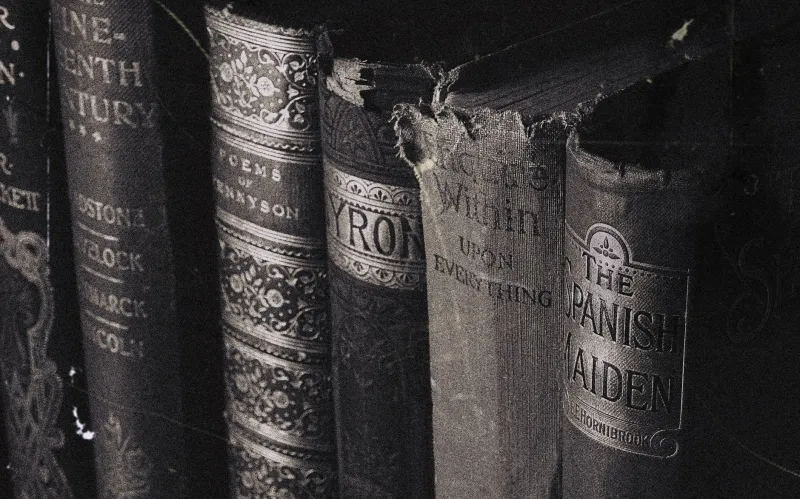
Every serious writer leaves two bodies of work behind. The first sits on library shelves; the second is quieter, scattered across the spines of the books they read, annotated and re-read until the margins themselves become a kind of manuscript. In the case of Seamus Heaney, the contents of his personal library — now held in part at the National Library of Ireland and among the materials catalogued by institutions in Belfast and Dublin — offer readers in Britain and beyond an unusually intimate education in how a Nobel laureate was assembled.
Dante in the Margins
No single foreign influence on Heaney has been more thoroughly documented than Dante Alighieri. Heaney returned to the Divine Comedy across four decades, and the evidence is written directly into his own work: the 'Sweeney Redivivus' sequence, the terza rima experiments of his later collections, and his lifelong fascination with the idea of the poet as pilgrim.
What mattered to Heaney was not Dante the monumental classic but Dante the vernacular maker — a poet who proved that a regional tongue, Tuscan in his case, Ulster in Heaney's own, could carry the full weight of metaphysical enquiry. For a writer negotiating the divide between his Irish-speaking inheritance and his English-language education, that precedent was nothing short of liberating.
Frost, Hopkins, and the Sound of Sense
Alongside the Italians, Heaney's shelves testified to a deep engagement with American and English prosody. Robert Frost in particular provided him with a working theory: Frost's notion of 'the sound of sense' — the idea that the music of a sentence carries meaning before its words are parsed — runs through Heaney's early collections like a hidden current. Readers who hear the flinty consonants of 'Digging' or 'The Forge' are hearing Frost's doctrine filtered through a Bellaghy accent.
Gerard Manley Hopkins occupied a neighbouring position. Heaney's debt to Hopkins' sprung rhythm and dense, compound wordplay is evident from his earliest published poems, and he often cited the Jesuit poet as proof that a thoroughly patterned line could still feel spoken, urgent, alive.
Returning to Irish
Perhaps the most poignant volumes in Heaney's library were the humblest: Irish language primers and grammars, purchased and consulted across the whole span of his career. Heaney's Irish was that of the interested amateur rather than the fluent speaker, but his engagement with the language never lapsed. It surfaces in the etymologies of 'Anahorish', in the placename poems of Wintering Out, and in his translations from the Irish tradition, including his versions of poems from the Middle Irish 'Sweeney' cycle.
For Heaney, the Irish language functioned as a kind of buried acoustic — a sound beneath the English he wrote in, recoverable in fragments. The primers on his shelf were tools for that recovery, evidence of a poet determined to keep faith with a linguistic inheritance without pretending a fluency he did not possess.
A Reading List from the Laureate's Shelf
For readers in the UK wishing to build what might be called a Heaney reading list, the archive of his influences suggests the following core shelf:
- Dante, The Divine Comedy — ideally in a parallel-text edition; Heaney admired Dorothy Sayers' translation.
- Robert Frost, Selected Poems — for the 'sound of sense' and the rural lyric.
- Gerard Manley Hopkins, Poems and Prose — the prosodic engine room of Heaney's early style.
- Patrick Kavanagh, Collected Poems — the Irish poet Heaney most consistently championed, whose parochial vision reshaped his sense of what a local place could mean.
- Táin Bó Cúailnge (The Táin), in Thomas Kinsella's translation — the mythic substrate beneath much of Heaney's imagery.
- Elizabeth Bishop, Complete Poems — a model of precision and restraint that Heaney grew towards in his later, leaner style.
- An Irish language primer or dictionary — a nod to the poet's own habit of returning, page by page, to the first language of the island.
Reading as Method
What this shelf ultimately reveals is a method. Heaney read the way he dug — patiently, locally, with an eye for what lay beneath. His library was not a trophy cabinet of great names but a working collection, full of the practical equipment a craftsman needs: prosody from Frost and Hopkins, ambition and structure from Dante, memory and myth from the Irish tradition.
To read as Heaney read is not to imitate his conclusions but to adopt his posture: attentive, rooted, and always willing to go back to the beginning of things. Any reader who starts with these books, and then returns to the collected poems, will find the ground freshly turned.