One Nobel, A Thousand New Voices: How Heaney's 1995 Prize Rewrote the British Publishing Map for Irish Poetry
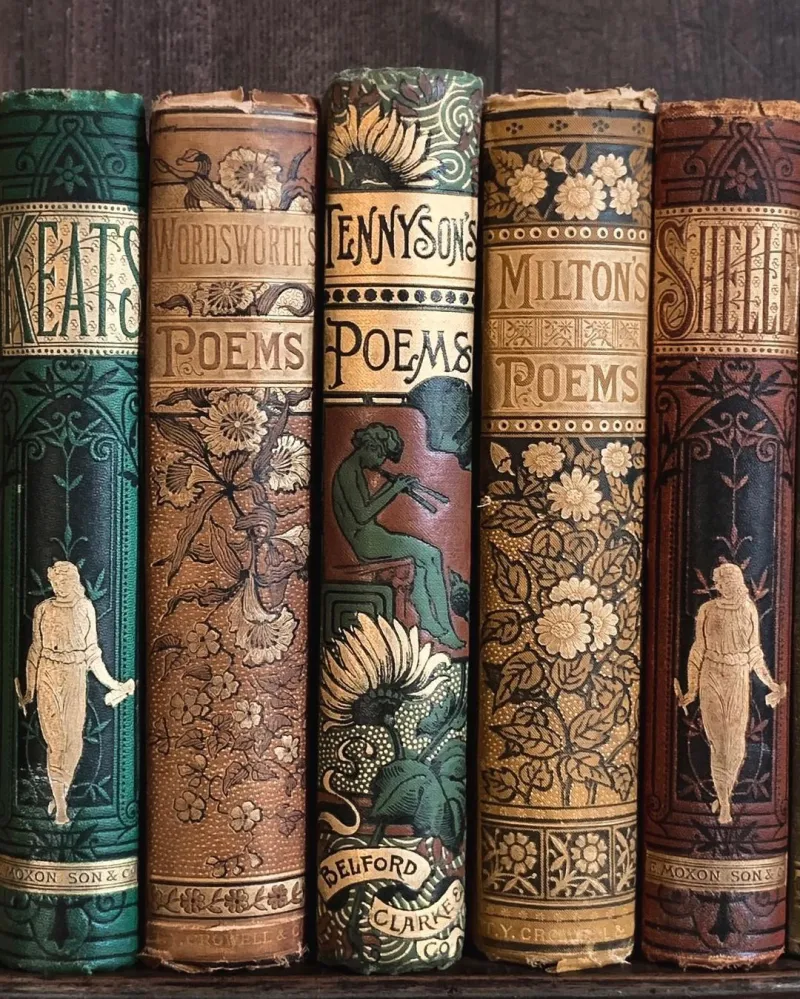
Photo: vintage poetry books on bookshop shelves UK literary archive, via i.pinimg.com
When Seamus Heaney was awarded the Nobel Prize in Literature in October 1995, the reverberations were felt not only in literary circles but in the commercial offices of British publishers. What followed was an unprecedented reconfiguration of the bookselling landscape, as editors scrambled to acquire, reprint, and champion Irish voices that had long been overlooked on British shelves. The story of what happened next is as much a tale of market forces as it is one of cultural awakening.
A Prize That Moved Product
In the weeks immediately following the Nobel announcement, Faber and Faber — Heaney's long-standing British publisher — reported a dramatic surge in orders for his existing collections. Selected Poems 1966–1987 and The Spirit Level, released earlier that same year, were reprinted multiple times within months. Bookshops across England, Scotland, and Wales found themselves unable to keep Heaney's titles on the shelves. What had previously been a steady, if modest, seller became an urgent commercial priority.
Yet the more consequential shift was not merely in Heaney's own sales figures. The Nobel Prize functioned as a kind of cultural permission slip for British publishers who had historically treated Irish poetry as a niche interest — admirable, perhaps, but unlikely to shift units beyond a specialist readership. Heaney's recognition by the Swedish Academy demonstrated, with considerable force, that Irish verse could command mainstream attention. The question publishers began asking was no longer whether to stock Irish poetry, but how much of it they had been missing.
The Ripple Effect Across Imprints
Gallery Press, the Oldcastle-based Irish publisher that had long championed poets such as Eavan Boland, Paul Muldoon, and Michael Longley, found itself fielding inquiries from British distributors and co-publishing partners who had previously shown little enthusiasm. Co-distribution arrangements that had stalled for years were suddenly revived. British imprints began seeking rights to titles that had circulated primarily within Ireland, recognising that there was now a receptive market across the Irish Sea.
Major poetry publishers including Bloodaxe Books and Carcanet Press expanded their Irish acquisitions during the latter half of the 1990s. Bloodaxe, already known for its commitment to poets outside the metropolitan mainstream, increased its representation of Irish writers significantly. Carcanet, meanwhile, brought several important Irish collections to wider British attention, including works by poets who had spent years publishing to critical acclaim at home without achieving significant visibility in Britain.
The effect was cumulative. As more Irish titles appeared on British shelves, readers who had discovered Heaney through his Nobel coverage began exploring adjacent voices. Bookshop buyers, responding to genuine customer demand, allocated more table space and promotional resource to Irish poetry sections that had previously consisted of little more than a single shelf tucked beside the Celtic studies titles.
Editors Reflect on a Decisive Moment
Those who worked in British publishing during this period speak of the Nobel Prize as a before-and-after moment with unusual clarity. The consensus among editors who were active at the time is that Heaney's recognition did not merely create a commercial opportunity — it legitimised a body of literature that had been systematically undervalued within British publishing structures.
Part of what made the shift so pronounced was the nature of the British literary establishment's prior relationship with Irish writing. Despite geographical proximity and deep historical entanglement, Irish literature had often been treated as foreign in a way that other Anglophone traditions were not. Heaney's Nobel — awarded, as the Swedish Academy noted, for works of lyrical beauty and ethical depth — complicated that distance. Here was a poet who had grown up in County Derry, written in English inflected by the rhythms of rural Ulster, and been recognised as one of the most significant literary figures of the twentieth century. The implicit argument was impossible to ignore: British readers had been failing to engage with a tradition of extraordinary richness on their doorstep.
The Question of Visibility and Access
One of the structural consequences of the post-1995 publishing boom was a meaningful improvement in the physical availability of Irish poetry collections in British towns and cities. Prior to Heaney's Nobel, a reader in, say, Leeds or Bristol seeking collections by Nuala Ní Dhomhnaill, Ciaran Carson, or Medbh McGuckian would have faced considerable difficulty. These poets were known to specialists and to readers who actively sought them out, but they were not part of the ambient literary landscape in the way that, for instance, Ted Hughes or Carol Ann Duffy were.
The reprinting and wider distribution of Irish titles after 1995 altered this situation materially. Collections that had been out of print in Britain were reissued. Anthologies of contemporary Irish verse — some newly compiled, others updated — appeared in general bookshops rather than being confined to academic suppliers. The Irish poetry section, where it existed at all, became a recognisable feature of well-stocked British bookshops rather than an anomaly.
This visibility had a generational dimension. Younger readers encountering Heaney for the first time through school syllabi or newspaper coverage in 1995 were, in many cases, discovering not only a single poet but an entire literary tradition. The British educational establishment's gradual incorporation of more Irish writing onto examination syllabi during the late 1990s and early 2000s was partly a response to this broader cultural reorientation.
A Legacy That Outlasted the Initial Surge
Publishing booms, as anyone in the industry will acknowledge, are frequently short-lived. The commercial enthusiasm that greets a major literary prize can evaporate within a year or two, leaving the underlying structural conditions unchanged. What made the post-1995 moment different, in the case of Irish poetry, was that the interest proved more durable than a simple market spike.
Several factors contributed to this durability. Heaney himself continued to publish significant work throughout the late 1990s and into the 2000s, maintaining a public presence that kept Irish poetry in view. The growing profile of other Irish writers — novelists as well as poets — sustained general interest in Irish literature as a category. And the networks of distribution and co-publishing that had been established or revived in the wake of the Nobel Prize proved resilient enough to persist beyond the initial enthusiasm.
For the Heaney Archive, what this history illuminates is the degree to which a single writer's recognition can function as infrastructure for an entire literary tradition. Heaney did not seek to be a standard-bearer for Irish poetry in any programmatic sense. His ambitions were always particular, rooted in the specific textures of language and landscape that animated his own work. Yet the scale of his achievement created conditions in which other voices could be heard — conditions that, in Britain at least, had not previously existed to the same degree.
The Nobel Prize did not create Irish poetry. It did, however, ensure that British readers could no longer claim they had never had the opportunity to find it.